Have you ever wondered why professional athletes are so particular about their equipment?
Sometimes it’s just a thicker sole or a slightly different feel to the fabric, but they can detect differences that others completely miss. There’s actually a rigorous scientific logic behind this. To them, equipment isn’t just a tool; it’s an extension of the body and mind working in tandem.
Numerous scientific studies have been conducted on the principles of athletic equipment , from the cushioning structure of the sole to the design of fiber tension. Every detail has been repeatedly tested, modeled, and refined. These seemingly “picky” decisions are actually based on a deep foundation in mechanics, biology, and even psychology. Understanding these principles can not only improve training efficiency but also help you avoid many seemingly accidental sports injuries.
Sports Equipment and Human Body Science: Every Inch Counts
Mechanical design – energy management from cushioning to rebound
I used to think that running shoes only needed to be “comfortable”, but later I found out that the details involved are far more complicated than I imagined.
The curves of the soles and the shock-absorbing materials of running shoes are all precisely “calculating” the flow of energy. Every time the sole of the foot lands, the equipment is quietly sharing the impact force, absorbing that part of the vibration and then directing the rebound energy back to reduce the pain on the knees. The logic of basketball shoes is completely different – it has stronger lateral support, more direct rebound force, and maintains stability during rapid changes of direction, just like having an invisible safety belt under the feet.
I played basketball frequently in college, and I remember one time I changed into a pair of new shoes with particularly strong lateral support. In that game, when I made an abrupt stop and change of direction, I could clearly feel the sole of the shoe “supporting” my ankle, as if someone was gently supporting it. That difference of a few tenths of a second allowed me to avoid a possible sprain. At that moment, I realized for the first time that the equipment can really “protect you” and it is not just an advertising slogan.
Material technology – a delicate balance between lightness and support
Modern sports equipment is constantly being updated with new materials every year. Carbon fiber, high-elastic nylon yarn, EVA foam… Each one aims to achieve the same goal: lighter, yet still stable.
Lightweight does save energy, but without support, the ankles and knees have to bear some of the weight.
Therefore, professional athletes never simply consider whether a shoe is light, but rather whether it provides just the right feedback within their movement rhythm. Sometimes, they even prefer a slightly heavier shoe, as that weight provides the body with a sense of security. That subtle difference often marks the line between professional and amateur.
The Psychology and Neuroscience of Equipment Selection
Sense of ritual and trust: hidden boosters of psychological expressiveness
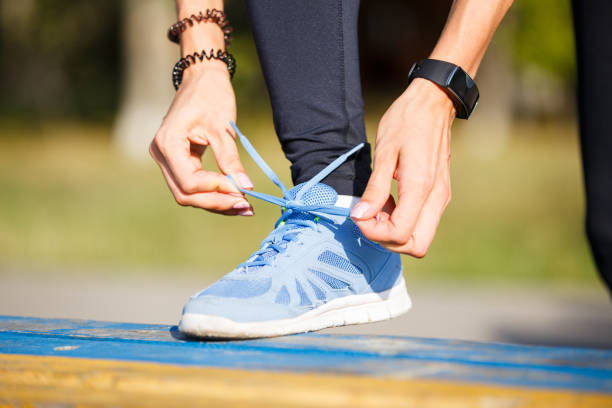
Many people think that athletes’ “little movements” are just habits: tying shoelaces, bouncing a ball, taking a deep breath. But these tiny rituals are actually the “psychological buttons” that help them get into the zone.
This ritual allows the brain to quickly enter focus mode, like issuing a command to the system – “Start now.” Psychological research has found that familiar movements and sequences can significantly reduce anxiety and give people a sense of security and control.
I believe that many people will be nervous when participating in a rock climbing competition for the first time , even to the point of shaking. You can improve before re -tying your shoelaces, patting the magnesium chalk bag, and taking a deep breath. I believe that after completing this series of movements , your heartbeat will also slow down. The true meaning of this sense of ritual is to serve as a stable anchor for the mind.
Neurofeedback and Movement Mindfulness: The Body’s Hidden Language
When gear fits snugly, the nervous system sends a “safety signal” to the brain.
You feel more stable and grounded, your muscles naturally relax, and your movements become smoother. Those “right feelings” during training are often the result of neural feedback.
This is why professional athletes, when trying on their gear, fine-tune it over and over again until that “right feeling” emerges. At that moment, they know—the gear and body have finally become one.
The Evolution of Sports Equipment: From Protection to Smart Sensing
Limitations of traditional equipment
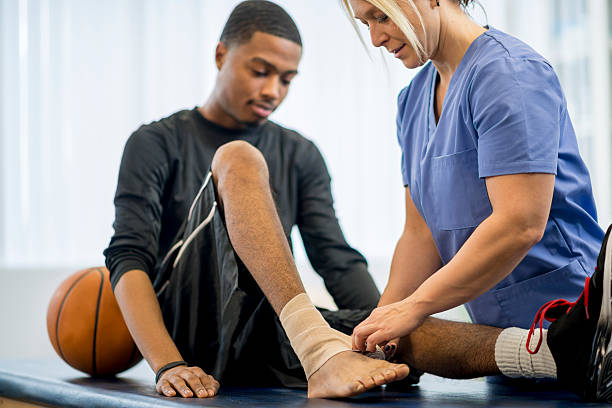
Early sports equipment was more about passive protection: non-slip soles and anti-collision pads, practical but bulky. Training back then relied more on experience and physical memory.
The rise of smart devices
Now, smart insoles can track gait, and motion-sensing wristbands can record muscle engagement. Training has shifted from “feeling it” to “reading the data.” Athletes now have a clearer understanding of how their bodies interact with their equipment.
In a sense, this is an extension of sports science popularization—we don’t just “move,” we move with understanding.
Why “picky” represents professionalism
Many people mistakenly believe that athletes choose equipment based on brand or appearance, but in fact, they are more like scientists.
They pay attention to the thickness of the sole, the elasticity of the fabric, and the angle of the protective gear – because every tiny variable can affect movement efficiency, energy transfer, and even psychological stability.
Their “nitpicking” is actually an extreme form of self-awareness: the more sensitive they are to their bodies, the closer they are to their limits.
Conclusion: Let science be your best weapon
The true value of equipment is never in the price tag, but in whether it can become a complete system with your body.
Understanding the scientific logic behind sports equipment is the smartest way to show respect for training. Whether you are a professional athlete or an ordinary person working hard in the gym, choosing equipment scientifically is protecting yourself.
After all, every training session is not just about the accumulation of sweat, but also a dialogue with the body and science.
Next time you hesitate about a pair of shoes, you might as well ask yourself quietly:
Does this equipment really understand my body?
Related Posts
Badminton racket selection guide: Find your best partner
Badminton is full of vitality and fun. If you want…
Essential sports equipment: How to choose different ball sports to avoid pitfalls?
You've probably had a similar experience: you just wanted to…
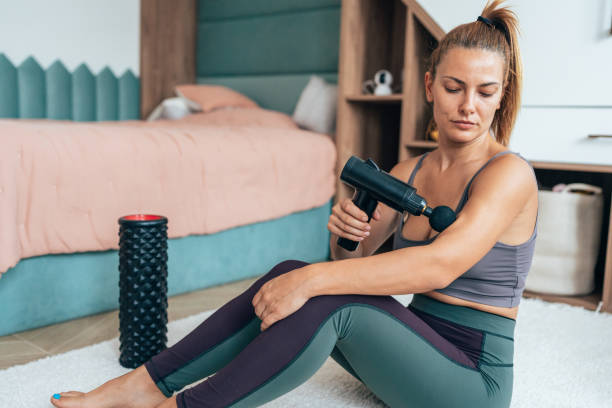
A must-read for post-exercise recovery: Understanding your equipment can help you stay away from injuries
In the world of fitness and exercise, training intensity often…