Badminton is full of vitality and fun. If you want to sweat and show off your style on the court, a suitable badminton racket is crucial. How to choose from the dazzling array of badminton rackets on the market? Don’t worry, we will now provide you with a detailed guide for purchasing badminton rackets.
Select photos by type
Offensive racket
Distinctive characteristics, usually with a large swing weight, a balance point close to the racket head, and a hard center pole. This design can provide players with strong power at the moment of hitting the ball, helping to hit powerful kills and quickly suppress opponents. Suitable for players who pursue strong attacks and enjoy actively controlling the pace of the game, such as singles attacking players who are highly favored. For example, the Unix VT-ZF2 is a classic offensive racket, loved by professional players and advanced offensive enthusiasts for its excellent offensive performance.
Speed type racket
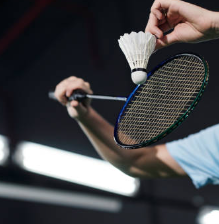
Pursuing a fast and crisp hitting sensation, the balance point is relatively low, the swing weight is moderate or light, and the frame adopts a low wind resistance design. In doubles, players need to react quickly and hit frequently. Speed rackets allow you to easily respond, quickly return the ball, grab the net, and control the initiative in front of the net. For singles players who pursue speed, they can also use their lightweight and flexible characteristics to quickly mobilize their opponents. For example, the Victory JS-12F, with its excellent speed advantage, helps players stay one step ahead on the court.
Offensive and defensive racket
The balance point is moderate, and the swing weight is also moderate, striving for comprehensive performance and suitable for various playing styles. This type of racket can effectively balance both offense and defense, as well as pull and draw blocking. For players with comprehensive skills, balanced offense and defense, and no obvious playing style bias, it is an excellent choice. The Li Ning Fengdong 9000 series meets the needs of many athletes with its excellent comprehensive performance.
Focus on key parameters
weight
The weight of badminton rackets is generally marked with “U”, and different markings correspond to different weight ranges: 2U (90-94 grams), 3U (85-89 grams), 4U (80-84 grams), 5U (75-79 grams). The larger the number, the lighter the weight. Usually, lighter rackets are advantageous for quick swings, creating a speed advantage, but may be slightly lacking in power transmission; A heavier racket can bring greater hitting power, but it requires higher strength and physical fitness from the user. For beginners or those with less strength, it is recommended to choose lightweight 4U or 5U rackets that are easy to control; Players with a certain foundation and good strength can choose a 3U or even 2U racket according to their own playing style and strength condition.
Balance
It can be divided into head heavy, head light, and balanced types. A racket with a heavy head can use the weight of the head to generate greater force when hitting the ball, making it suitable for attacking players to perform powerful attacks such as killing the ball; A light headed racket with fast swing speed is more conducive to defense and quick response, suitable for defensive players or beginners; A balanced racket achieves a balance between strength and speed, with a more comprehensive playing style. When choosing, it is necessary to combine your own playing style and habits. If you are an attacking player, a heavy racket may be more suitable for you; If you focus on defense and quick reflexes, a lightweight racket would be a good choice.
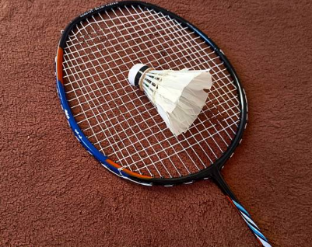
Middle pole
The softness and hardness of the middle pole have a significant impact on the hitting feel and power transmission. The soft rod has good elasticity and can produce significant deformation when hitting the ball, giving more force back to the ball. It is suitable for players with less strength or defensive play, and can easily hit the ball far with the help of elasticity. A hard rod can provide better control. At the moment of hitting, the deformation of the middle rod is smaller, which can more accurately control the direction and landing point of the ball, suitable for offensive players and those who pursue precise ball control. Beginners can choose rackets with moderate mid shaft softness and hardness to cultivate their hand feel first; With the advancement of technology, choose a softer or harder mid-range according to your own playing preferences.
Grip

The grip size is commonly represented by “G” plus a number, such as G1 (4 inches), G2 (3 3 3/4 inches), G3 (3 1/2 inches), G4 (3 1/4 inches), G5 (3 inches). When choosing the grip size, it is not solely based on the size of the hand, but more on personal playing style. If you are a beginner or focus on delicate control in your playing style, a smaller grip size (such as G4, G5) is more suitable. It allows your wrist to adjust the hitting angle more flexibly, making it easier to hit skillful balls such as net balls and light lifts. If you have strong power and your playing style is mainly focused on vigorous attack, a larger grip size (such as G1, G2) can allow you to exert more force when hitting the ball, increasing your hitting power.
Take a frame
The frame shapes are diverse, including standard (oval or oval), square, diamond, teardrop, etc. Different shapes affect the size and feel of the sweet zone (the area on the racket that provides the best hitting effect) of the racket. The sweet zone of the square frame is relatively large, making it easier to hit the sweet zone, with a high tolerance rate, suitable for beginners and players who pursue stable hitting. The standard shape frame is more balanced between the size of the sweet area and the texture, which can meet various playing needs. Diamond or teardrop shaped frames, some with longer main lines, feel more “bouncing” when hitting the ball, suitable for advanced players who pursue unique touch and have higher requirements for hitting the ball. In addition, some racket frames adopt a wide body design, which makes the frame wider when viewed from the side, increasing the hitting power, but the wind resistance also increases accordingly when swinging.
Material considerations

All carbon fiber
The current mainstream material for badminton rackets has the advantages of light weight, high strength, and good elasticity. The all carbon fiber racket can effectively reduce the weight of the racket, allowing players to swing easily, while ensuring good power transmission and elasticity, providing excellent hitting feel and performance. The price is relatively high, but the durability is strong, making it the best choice for pursuing high-quality rackets. Many high-end rackets on the market are made of all carbon fiber materials, such as Yonex’s Skyaxe series and Victory’s Bright Sword series.
Carbon composite fiber
On the basis of all carbon fiber, it is composite by adding other materials. This type of racket is relatively affordable in price, with a certain level of strength and elasticity, which can meet the needs of most amateur enthusiasts. However, in terms of weight control and performance, there may be a slight gap compared to all carbon fiber rackets. For beginners with limited budgets or occasional basketball enthusiasts, carbon composite fiber rackets are a cost-effective choice.
Other materials
Wooden rackets, once a common material for badminton rackets, are now rare in competitive matches due to their heavy weight, limited strength and elasticity, which are not conducive to the fast-paced and high-intensity competition of modern badminton. However, wooden rackets are inexpensive and can still be a simple choice for children or those who only occasionally play in leisure settings. Metal rackets (such as steel and aluminum) have some good durability, but steel rackets may be heavier, while aluminum rackets may be slightly inferior in durability, and in terms of hitting feel and performance, they are not as good as carbon fiber rackets. Currently, their market share is relatively small.
Select photos horizontally
The threshold Level
Beginners should pay more attention to usability and comfort when choosing to shoot. It is recommended to choose lightweight (4U, 5U) badminton rackets that are easy to control and reduce the burden of swinging. The mid-range has moderate softness and hardness, providing a good tactile sensation and helping beginners develop a sense of hitting the ball. In terms of material, either full carbon fiber or carbon composite fiber can be used, which is both lightweight and durable. It is advisable to choose a medium to low weight (20-23 pounds) for the weight. At this weight, the racket has good elasticity and hits the ball easily, allowing beginners to better experience the hitting action and power method.
Advanced stage

With the advancement of technology, there are higher requirements for racket performance and technical parameters. You can choose the appropriate racket type based on your personal technical characteristics. If the power is strong and the playing style leans towards offense, you can try using a 3U racket to pursue better power transmission; If the technology is comprehensive and emphasizes speed and flexibility, a 4U racket is still a good choice. In terms of mid-range shooting, defensive players can choose soft shots to increase their defensive range through elasticity; Offensive players can choose hard rods to improve ball control accuracy and offensive power. The weight can be increased to medium weight (23-25 pounds) or medium to high weight (25-27 pounds), fully utilizing the performance of the racket and better adapting to one’s own playing style.
Professional Stage
Professional players have extremely high requirements for racket performance and quality. They usually choose professional grade rackets from well-known brands and customize exclusive rackets based on their personal technical characteristics and competition needs. In terms of weight, it is recommended to use high weights (above 28 pounds). Under high weight, the racket and bed are tight, providing more precise ball control and powerful hitting power, meeting the high-intensity competition and high requirements of professional matches.
Choosing a badminton racket requires comprehensive consideration of various factors such as type, parameters, material, as well as one’s own level and playing style. Only by choosing the racket that suits oneself can one perform at their best on the court and fully enjoy the joy brought by badminton. I hope this shopping guide can help you find your favorite badminton racket and embark on an exciting badminton journey.
Related Posts
Resistance Umbrella Sprint Training: The Ultimate Equipment to Improve Explosive Power?
In the field of sprint training, finding training equipment that…
Unlock new skipping rope gameplay: Embark on your efficient journey of burning fat and vitality
Hey, Fitness enthusiasts! Are you still struggling to find efficient…

Having an excellent sports backpack allows for worry free movement: A complete guide to sports backpacks
Sports enthusiasts, when you are preparing to head to the…