Why is choosing the right sports equipment so important?
Many people assume that exercise should be “conservative” as you age, but the opposite is true—the real danger isn’t moving, but inactivity. Numerous studies have repeatedly confirmed the benefits of regular exercise for older adults : maintaining mobility, stabilizing balance, improving cardiopulmonary function, and even brightening moods. But here’s the kicker—you have to use the right equipment.
Don’t underestimate the word “equipment”. It is not just a new toy for young people to show off. For older people, it is more like an “insurance policy”.
Safety comes first. The older you get, the more your joints and muscles become like glass, easily broken by a drop. Choosing inappropriate equipment can lead to not only improved fitness but also potentially a hospital visit.
Then there’s functionality. Some equipment may look like “sports equipment,” but few truly understand the physical characteristics of older adults and can help maintain correct posture and avoid excessive strain.
Finally, it’s all about persistence. Good equipment should be something I’d like to touch every day, not something I’d just use as a clothes drying rack. Equipment that’s complex to operate and difficult to adjust shouldn’t be considered.
According to the Journal of Aging and Physical Activity, consistent low-impact resistance and balance training can reduce the risk of falls by 40% , which is no small feat. With the right equipment, exercise becomes more than a challenge; it’s a process of regaining control of your body. We shouldn’t compete with the young; we should invest in our own independence and dignity.
Recommended sports equipment worth buying
1. Aerobic equipment: Take good care of your “darling”
The core goal of aerobic exercise is to get your heart rate up, but don’t push yourself to the point of being out of breath . The following are some options I highly recommend for seniors:
Recumbent Bikes : These are a favorite for those with knee pain or back problems. With a supportive backrest, they’re less prone to back pain and perfect for those who crave exercise but still want to move.
Elliptical Trainer : I personally like this one. It allows you to move your entire body, but the impact is almost zero, like walking on air.
A treadmill with safety handrails : Choose one with adjustable incline and slow walking speed. The most important thing is that the handrails must be stable! A handrail can help you stay safe if you feel dizzy.
Walking Pad : A special artifact for small houses. You can just spread it out and walk around. It doesn’t take up space when you put it away.
Keep in mind a few practical purchasing criteria : a large screen with clear text, preferably one with a “safety key” that stops the vehicle with a single pull, and pedals that aren’t too narrow to trip over.
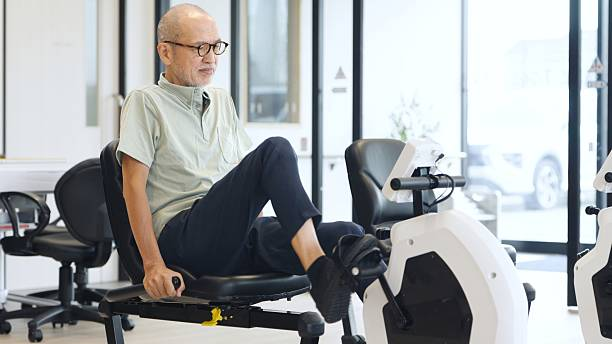
2. Strength training equipment: building strong “skeletal muscles”
After age 50, muscle isn’t lost on its own; it’s lost without your knowledge. Don’t worry; you don’t have to go to the gym to regain it; you can do it at home.
Resistance bands : Light enough to carry in a handbag, yet incredibly firm. Joint-friendly and versatile, they’re sure to break your back if you don’t practice them.
Adjustable dumbbells : Don’t underestimate the word “adjustable”, it is the guarantee of gradual progress.
Seated weight machine : The one with the strongest control, generally available in community gyms, with a stable movement trajectory and not prone to shaking.
Ankle/wrist sandbags : Tie them on while walking, and your daily activities will be transformed into “invisible training”.
There is only one training principle: slow, heavy is more important. If you feel your muscles warming up, that’s right.
Example action combinations:
Resistance band leg extensions x 10 reps
Dumbbell curls x 8 reps
Seated rowing × 15 times
(twice a week, stick to it for a month to feel the difference)
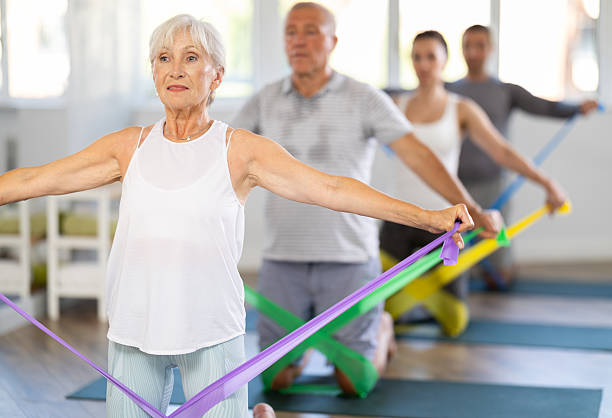
3. Balance and flexibility equipment: Say goodbye to falling anxiety
Balance Board/Wobble Cushion
Yoga mat (must be non-slip)
Foam Roller
Tai Chi stick/Tai Chi stick
Challenge yourself: Stand on a rocking cushion for 30 seconds every day. It doesn’t matter if you rock a few times, but when you hold it steady, you’ll smile and say, “Hey, I’m still okay.”

4. Recovery and Activity Equipment: The Secret to Staying Comfortable
Massage Ball/Roller
Stretching Straps
Compression braces/bandages
Just 10 minutes a day and your body will reward you with a “less stiff morning”.
5. Technology-Enhanced Equipment: Making Training Smarter
Smart bracelet/watch
Virtual Training App
Smart resistance device
Voice-controlled devices are a boon for people with low vision : Just say “Alexa, start walking mode,” and the world starts moving.
Frequently Asked Questions (FAQs)
Q1: What is the safest exercise equipment?
Recumbent bikes and resistance bands, hands down.
Q2: Is it safe for the elderly to lift weights?
Yes, as long as you don’t try to be too aggressive or hold your breath.
Q3: What should I choose for a small apartment?
Resistance band + yoga mat + foldable treadmill = the perfect three-piece set.
Q4: Should I consult a doctor before buying?
Absolutely. A checkup is more economical than a single injury.
Conclusion: Choose wisely and move forward with confidence
Exercise is not just for the young; it’s the right of everyone who wants to continue to control their own lives. You don’t need to become strong all at once; you just need to start.
Take a look at the equipment you have at home. Is it helping you exercise, or is it just gathering dust? If the answer isn’t good, replace it with something truly made for you. Your future self will thank you for taking the leap.
Related Posts
Exploring Weighted Vests: A New Training Option for Beginners
In the fitness world, how to more effectively enhance training…
Having an excellent sports backpack allows for worry free movement: A complete guide to sports backpacks
Sports enthusiasts, when you are preparing to head to the…
Life-saving Guide: Why is equipment quality more important than price in extreme sports?
In a world of speed and height, nothing is more…